
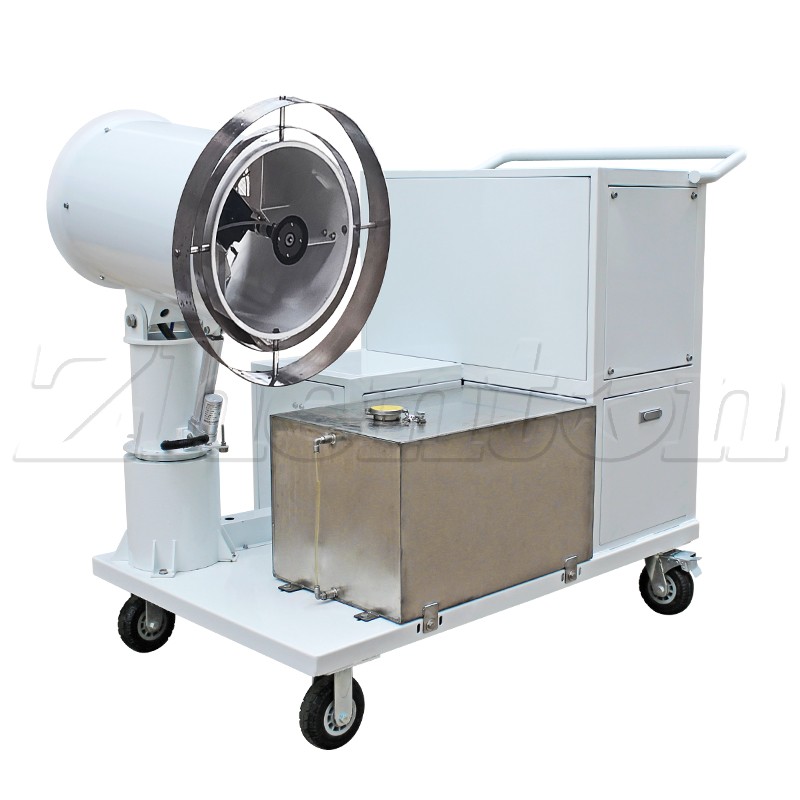
Dust is one of the most common yet underestimated challenges on construction sites. From demolition and earthworks to material handling and vehicle movement, airborne dust is generated almost constantly. While it may seem unavoidable, uncontrolled dust can quickly turn into a serious problem—affecting worker health, project timelines, public relations, and environmental compliance.
In this article, we explore the best dust control methods for construction sites, explain why effective dust suppression is no longer optional, and show how mist fog cannon systems have become one of the most reliable and efficient solutions for modern construction projects.

Before discussing solutions, it is important to understand why dust is such a persistent issue in construction environments.
Construction sites involve multiple dust-producing activities happening at the same time—excavation, concrete breaking, cutting, backfilling, and truck movement. Even if one source is controlled, others may continue releasing fine particles into the air.
Construction dust often contains PM10 and PM2.5 particles, which are light, small, and easily carried by wind. These particles remain suspended in the air for long periods and can travel far beyond the job site.
Dry conditions, high temperatures, and strong winds significantly increase dust dispersion. Traditional water spraying often becomes ineffective under these conditions due to rapid evaporation.
Excessive dust reduces visibility, increases accident risks, and exposes workers to respiratory hazards. Nearby residents and businesses may also file complaints, putting pressure on contractors and developers.
Dust suppression is no longer just about keeping the site tidy—it has become a critical management requirement.
Protecting Worker Health
Long-term exposure to construction dust can cause respiratory illnesses, eye irritation, and reduced productivity. A clean working environment improves morale and reduces sick days.
Meeting Environmental Regulations
Many regions now enforce strict dust emission limits. Failure to comply can result in fines, work stoppages, or even project shutdowns.
Improving Site Safety
Dust clouds reduce visibility for operators and drivers, increasing the risk of collisions and equipment damage.
Enhancing Project Image
A well-controlled construction site reflects professionalism. It helps maintain good relationships with local authorities, investors, and surrounding communities.
Traditional Dust Control Methods: Pros and Limitations
Construction companies have used several dust control methods over the years, but each has limitations.
Manual Water Spraying
Water hoses or sprinklers are low-cost but labor-intensive. Coverage is uneven, and water consumption is high.
Water Trucks
Water trucks can cover large areas but lack precision. They are inefficient for continuous operations and struggle to reach elevated or confined areas.
Chemical Dust Suppressants
While effective in some cases, chemical agents increase operating costs and raise environmental concerns.
Fixed Sprinkler Systems
Fixed systems work well in static areas but cannot adapt to moving dust sources or changing site layouts.
These limitations have driven the industry toward more flexible and efficient dust suppression technologies.
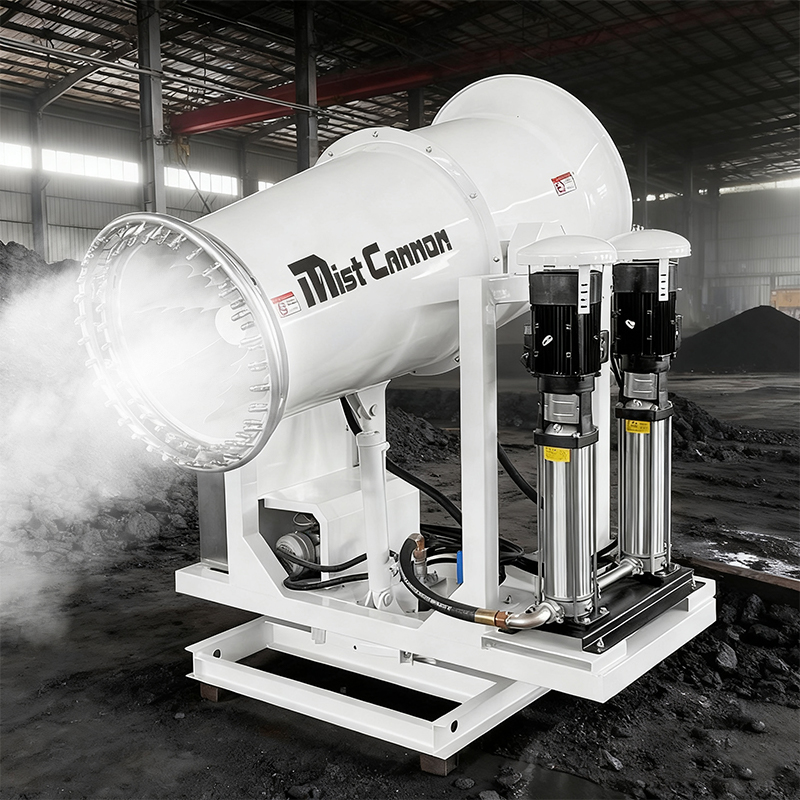
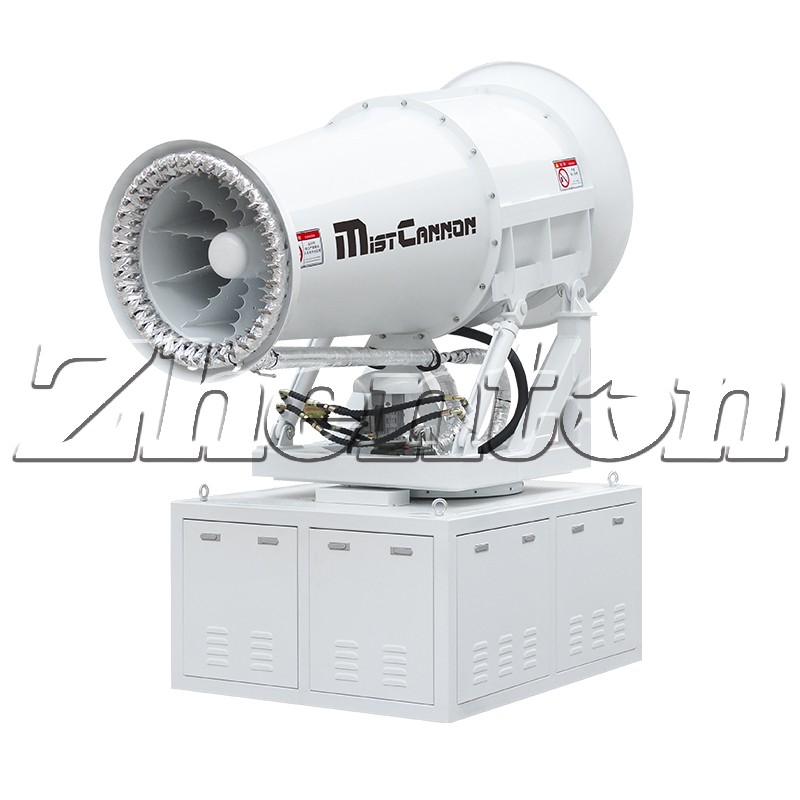
Among all available methods, mist fog cannon systems have emerged as one of the most effective dust control solutions for construction sites.
Mist fog cannons use high-pressure pumps and specialized nozzles to generate ultra-fine water droplets. These droplets bind with airborne dust particles, increasing their weight and causing them to settle quickly to the ground.
Key Advantages of Mist Fog Cannons
Long Spray Range: Covers large areas from a single position
Fine Mist Output: Highly effective for PM10 and PM2.5 dust
Lower Water Consumption: Uses significantly less water than traditional spraying
Flexible Installation: Available in fixed, trailer-mounted, vehicle-mounted, and self-propelled versions
Automatic Operation: Optional remote control, rotation, and timer systems
Practical Applications on Construction Sites
Mist fog cannons can be deployed across various construction scenarios.
Demolition Sites
During building demolition, massive amounts of dust are released instantly. Fog cannons positioned around the structure create a mist curtain that suppresses dust at the source.
Earthwork and Excavation
For large-scale excavation and backfilling, mobile fog cannons can follow the active work area, providing continuous dust control.
Material Stockpiles
Sand, cement, and aggregate piles are major dust sources. Fixed or semi-fixed fog cannons can protect these areas effectively.
Haul Roads and Vehicle Movement
Vehicle-mounted mist fog cannons installed on water trucks or service vehicles help control dust along internal roads without interrupting traffic flow.
On-Site Case Example (Parameters as Reference)
At a large urban construction project, a mist fog cannon with a spray range of xx meters was installed near the main excavation zone. The unit was equipped with an xx kW fan motor, automatic oscillation, and a spraying capacity of xx tons per hour.
Despite dry and windy conditions, the system maintained stable mist output throughout the day. Dust levels were visibly reduced, site visibility improved, and complaints from nearby residents dropped significantly within the first week of operation.
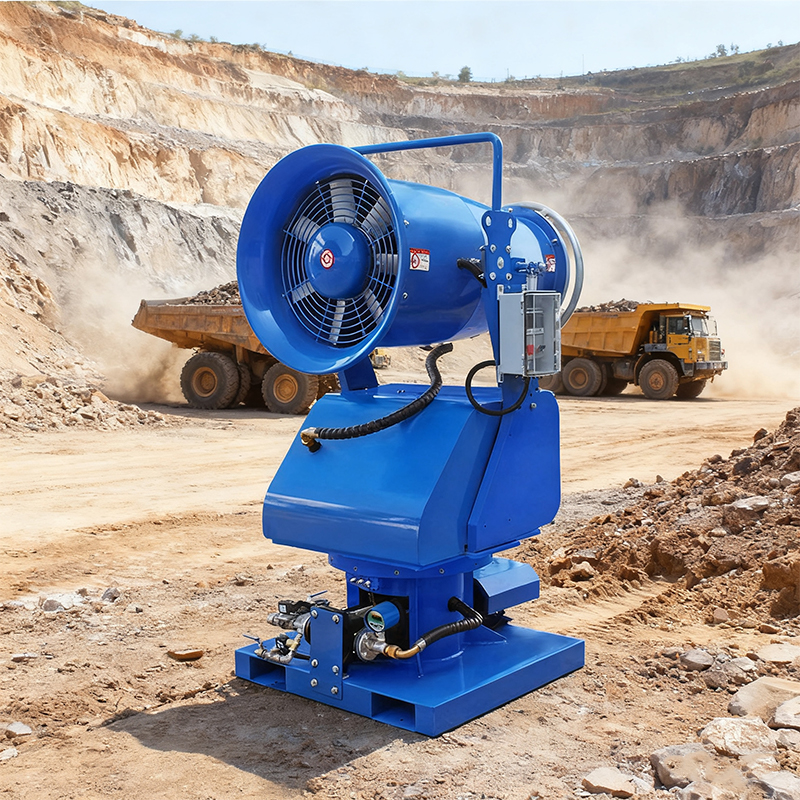
Q1: Is a mist fog cannon suitable for small construction sites?
A: Yes. Fog cannons are available in different sizes and capacities. Compact models are ideal for small or confined sites, while larger units serve large-scale projects.
Q2: Does mist spraying cause muddy working conditions?
A: No. Because the mist droplets are ultra-fine, they suppress dust without soaking the ground, maintaining safe and dry working surfaces.
Q3: Can mist fog cannons operate in windy environments?
A: Yes. Adjustable spray angles, rotation systems, and higher spray ranges allow fog cannons to adapt to moderate wind conditions more effectively than traditional methods.
When selecting a dust suppression solution for construction sites, consider the following:
Size and layout of the site
Main dust-generating activities
Local environmental regulations
Availability of water and power
Need for mobility or automation
Mist fog cannon systems offer a balanced combination of efficiency, flexibility, and cost-effectiveness, making them a preferred choice for many contractors worldwide.
Final Thoughts
Dust control is no longer a secondary task—it is a core part of responsible construction management. While traditional methods still play a role, they often fall short in today’s demanding construction environments.
By integrating mist fog cannon dust suppression systems, construction companies can significantly improve air quality, enhance safety, meet environmental standards, and protect their project reputation. As construction sites become larger, denser, and more regulated, advanced dust control solutions are not just beneficial—they are essential.
Contact With Us
If you have any questions please fell free to contact with us.