
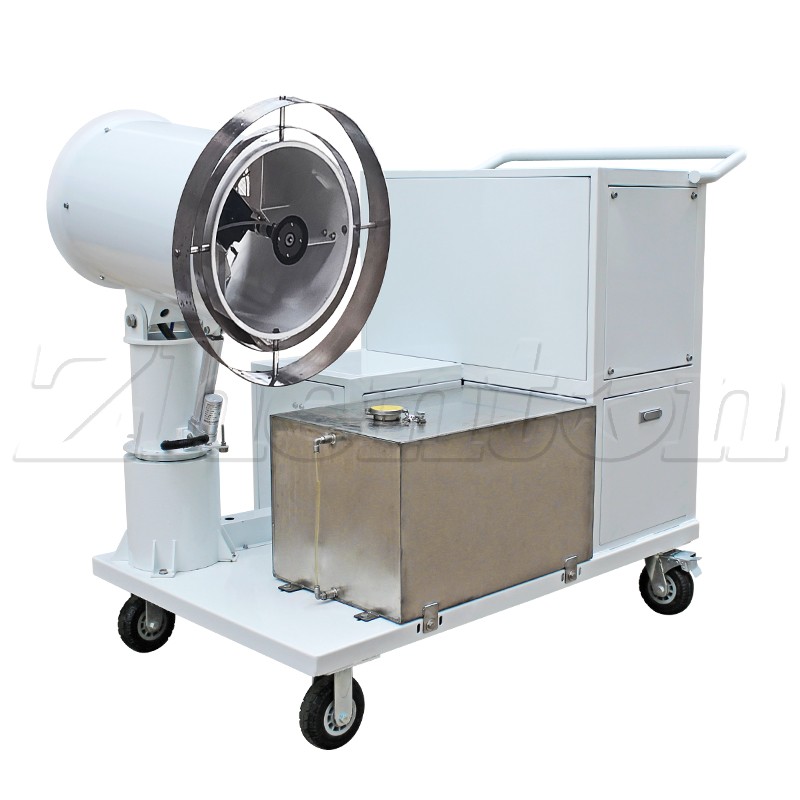
In heavy industries, mining, demolition, and bulk material handling, the battle against fugitive dust is constant. Failure to effectively manage airborne particulates PM10 and PM2.5 poses severe risks: regulatory fines, occupational health hazards (like silicosis), and substantial operational disruption.
The solution lies not in volume, but in precision. High-Efficiency Mist Cannon Dust Suppression Solutions represent the industry‘s benchmark, combining advanced technology with intelligent design to capture and mitigate dust at its source. This comprehensive guide details the science behind this technology, outlines the measurable financial return, and addresses the practical constraints of modern dust management.
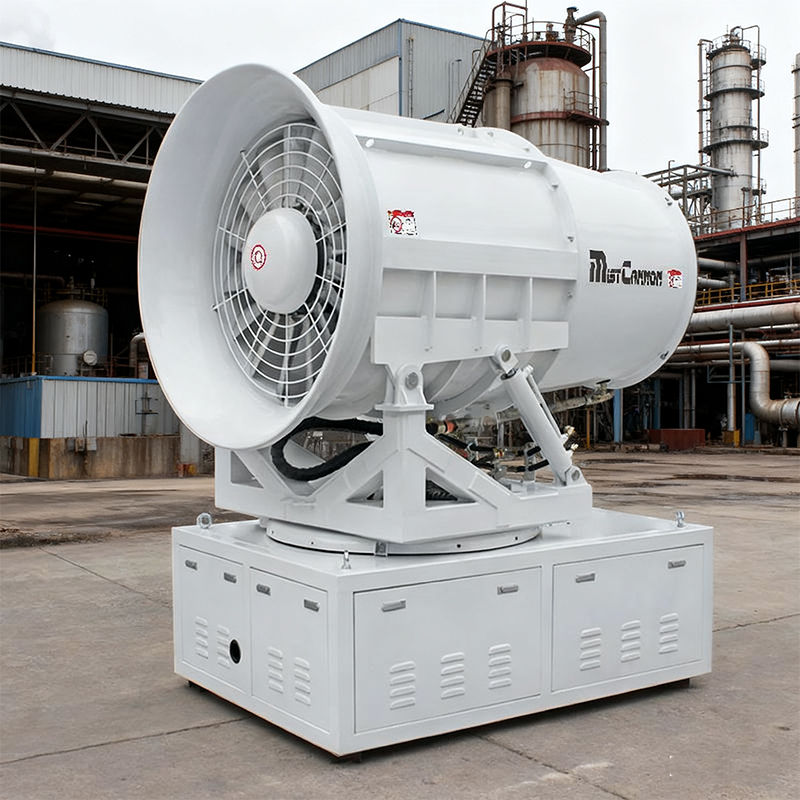
Fugitive dust refers to airborne particles that are not emitted from a confined stack or flue, but rather escape from open areas, such as stockpiles, haul roads, crushing plants, and material transfer points.
2.1. Primary Industrial Sources:
Material Transfer: The point where material drops from one conveyor to another, or into a truck/hopper, creates high-velocity dust plumes.
Stockpile Wind Erosion: Large surface areas exposed to wind are subject to continuous, passive dust generation.
Crushing and Screening: Mechanical processing generates extremely high concentrations of fine particles, including dangerous respirable crystalline silica (RCS).
Vehicle Traffic: Movement on unpaved roads lifts and disperses surface fines.
2.2. The Regulatory Landscape:
Regulatory compliance is the principal driver for investment. Agencies like the EPA (USA), EU directives, and regional environmental bodies impose strict limits on Time-Weighted Average (TWA) exposure for workers and boundary-line particulate matter (PM) concentration limits for sites. Non-compliance often results in significant financial penalties, forced reductions in production, or complete shutdown orders, making effective dust control an economic imperative.
The superior performance of a Mist Cannon lies in its scientific approach to overcoming the physical challenge of capturing a microscopic particle with a water droplet.
3.1. Precision Droplet Sizing:
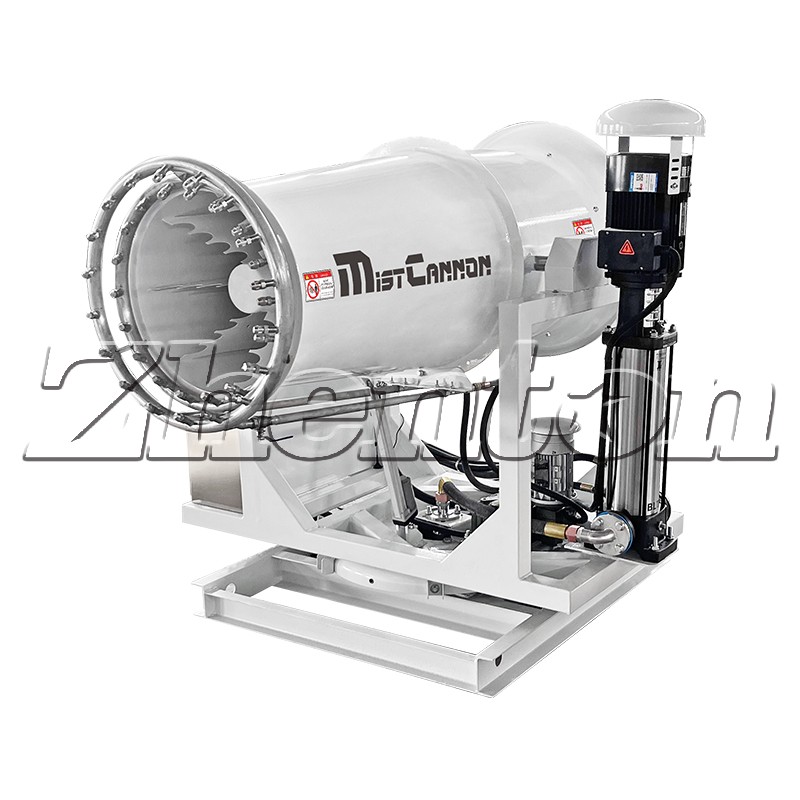
Mist Cannons utilize high-pressure pumps and custom nozzle arrays to achieve atomization, generating water droplets in a highly specific spectrum, typically 10 to 150. This range is not arbitrary; it is engineered to optimize the Agglomeration Efficiency. The droplets are sized to be large enough to retain momentum and travel long distances, but small enough to effectively collide with the majority of airborne PM10 and PM2.5 particles.
3.2. Airflow Dynamics and Projection:
A high-power axial fan provides the necessary kinetic energy. This concentrated, high-velocity airflow ensures the fine mist:
Penetrates Deeply: The powerful air stream forces the mist into the core of high-velocity dust plumes (e.g., at crusher exits).
Achieves Long-Range Throw: Effective projection (often 50m to 150m) allows a single cannon to cover massive areas or target multiple transfer points, something static spray bars cannot achieve.
Mixes Effectively: The airflow ensures the mist mixes thoroughly with the dust, maximizing contact before the now heavier, saturated dust particles settle safely to the ground.
Q&A Segment 1: Addressing Technical Performance
Q: How does the system adjust for wind conditions to ensure the mist actually reaches the dust plume?
A: Our advanced systems are equipped with integrated anemometers and wind vanes. The control PLC (Programmable Logic Controller) uses real-time wind data to make dynamic adjustments:
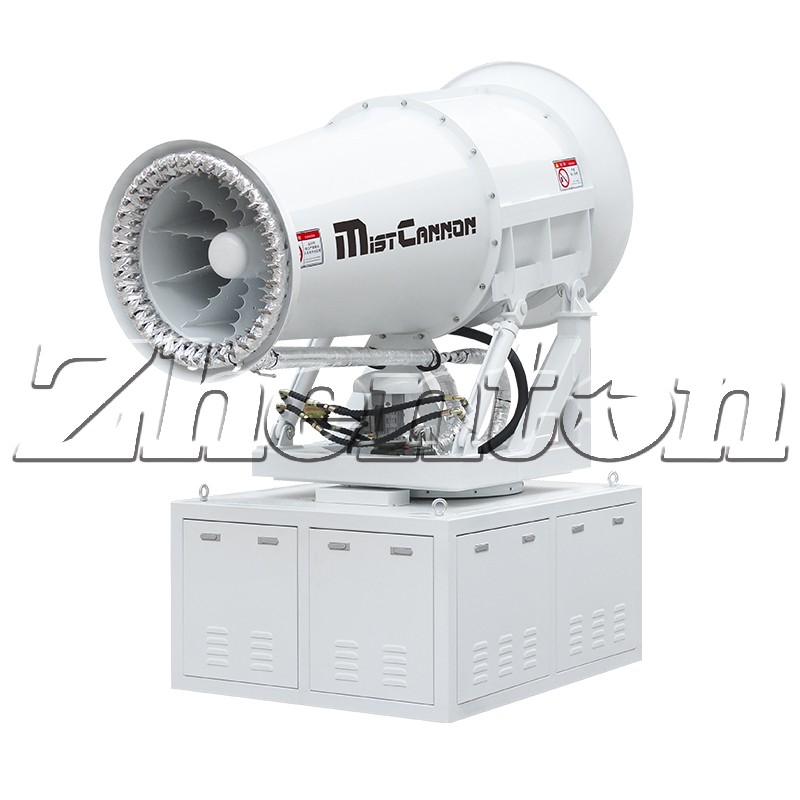
Oscillation Control: The unit automatically adjusts its horizontal sweep (oscillation arc) to focus the mist stream precisely into the dust plume as it travels downwind.
Flow/Throw Optimization: The fan speed (controlled by a VFD) can be increased or decreased to counteract wind speed, optimizing the mist’s trajectory and preventing rapid drift or premature settling. This automated control maximizes capture efficiency regardless of weather conditions.
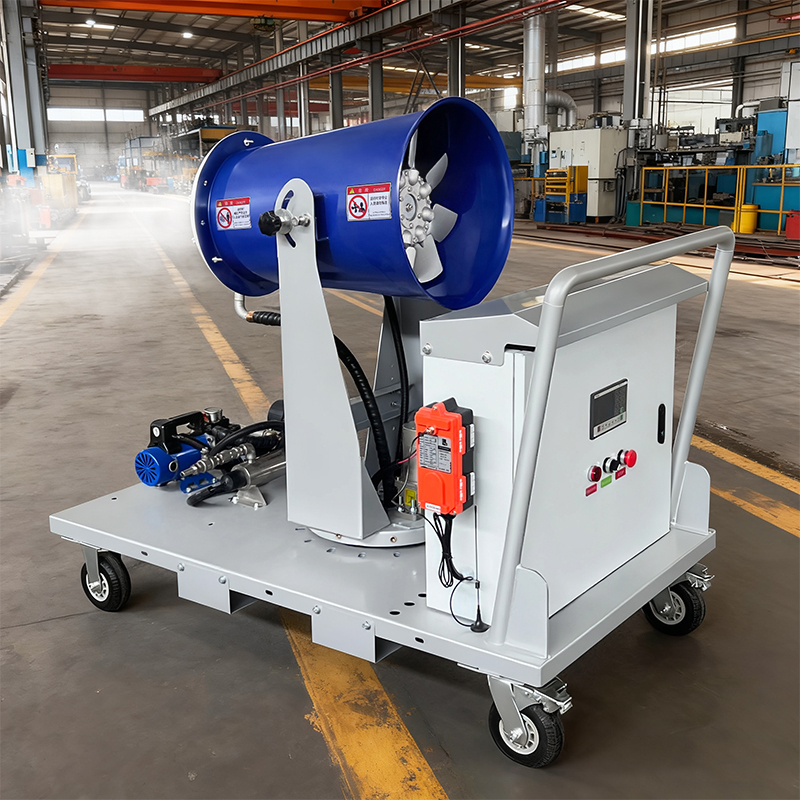
The decision to invest in a Mist Cannon is financially sound, with the return on investment (ROI) realized through cost avoidance and efficiency gains.
4.1. Compliance Cost Avoidance:
The most immediate financial benefit is the avoidance of regulatory fines and penalties for non-compliance. In many jurisdictions, a single major dust violation can exceed the capital expenditure (CAPEX) of a high-efficiency system. Consistent performance transforms compliance from a financial risk into a predictable operational standard.
4.2. Water and Resource Savings:
Due to the efficiency of atomization, Mist Cannons use significantly less water (often 50% to 70% reduction) compared to conventional hosing or manual systems. This drastically lowers operational expenditure (OPEX) related to water purchasing, pumping, and treatment. Furthermore, minimizing runoff reduces environmental remediation costs.
4.3. Equipment Longevity and Maintenance:
Dust, especially highly abrasive PM2.5 silica, accelerates wear and tear on all adjacent mechanical equipment, including engine filters, bearings, seals, and hydraulic systems. By maintaining a consistently cleaner atmosphere, the Mist Cannon directly contributes to:
Extended equipment life: Reduced abrasive damage to critical components.
Lower preventative maintenance costs: Fewer filter changes and fewer bearing failures.
4.4. Increased Operational Safety:
Improved visibility at transfer points and loading bays prevents costly accidents and equipment damage. By lowering RCS exposure, the company mitigates long-term occupational health liabilities and insurance costs associated with respiratory illnesses.
Q&A Segment 2: Financial Justification and Durability
Q: Our site water is drawn from a non-potable source with high levels of suspended solids. Will this rapidly clog the fine nozzles, negating the efficiency?
A: This is a crucial design consideration. The longevity of the system hinges on water quality. Our solutions mandate the use of a multi-stage water filtration skid upstream of the high-pressure pump. This filtration system removes suspended solids down to a size that guarantees the protection of the pump and the micron-sized nozzles. While filtration requires routine cleaning, it is a necessary investment that ensures the reliability and efficiency of the entire suppression system, guaranteeing its long-term ROI.
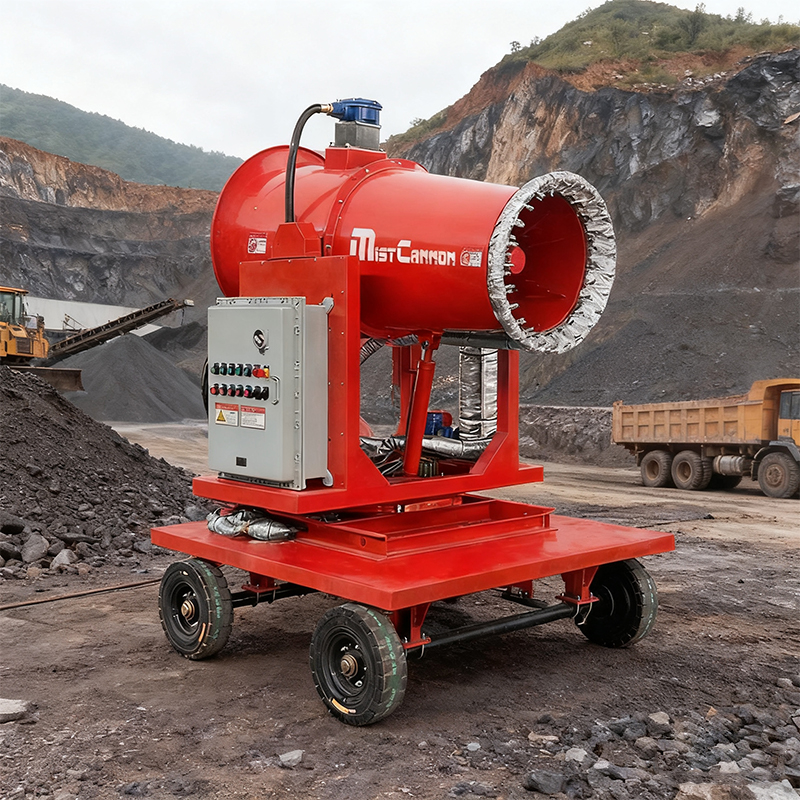
No technology is without limitations. Successful deployment requires anticipating and mitigating common operational constraints inherent to industrial sites.
5.1. Constraint: Water Supply and Pressure Fluctuations
The Problem: Inconsistent water pressure from site lines can lead to poor atomization quality or pump failure.
The Solution: We recommend integrated booster pumps and accumulator tanks to ensure a stable supply pressure is always available to the cannon, guaranteeing consistent droplet size and throw distance.
5.2. Constraint: Cold Weather Operation
The Problem: In regions with freezing temperatures, water lines and nozzles can freeze, leading to severe damage.
The Solution: Systems are available with a Cold Climate Package, which includes internal heating elements for the pump and pipework, insulation, and a critical automatic “blow-down” or drainage function. When the unit is shut off, it automatically purges all water from the lines to prevent freezing.
5.3. Constraint: Power and Mobility
The Problem: Running power lines to temporary or distant dust sources (like far-flung haul roads) is complex and costly.
The Solution: Many units are available as trailer-mounted, fully self-contained systems powered by an on-board, acoustically enclosed diesel or gasoline generator. This provides complete operational mobility and eliminates the need for fixed power infrastructure.
Q&A Segment 3: System Management and Labor
Q: Does managing a high-tech system require a dedicated, highly specialized technician on site at all times?
A: No. Our systems are designed for ease of operation and integration. The primary control interface is a user-friendly touch-screen PLC that allows for simple adjustments. Furthermore:
Remote Monitoring: We provide remote telemetry access, allowing your maintenance staff or our technical support to monitor system health, diagnose issues, and update settings from any web-enabled device.
Autonomous Operation: Once parameters (like wind speed cut-offs or schedule timers) are set, the cannon runs automatically, reducing the need for constant human supervision. Any competent site manager or electrician can be trained to handle 95% of routine maintenance and operation within a single day.
The adoption of High-Efficiency Mist Cannon Dust Suppression Solutions is a clear strategic decision in favor of sustainability, safety, and profitability. By deploying systems that leverage scientific precision and intelligent automation, your operation can effortlessly meet compliance demands while achieving measurable improvements in operational efficiency and asset protection.
Contact With Us
If you have any questions please fell free to contact with us.