
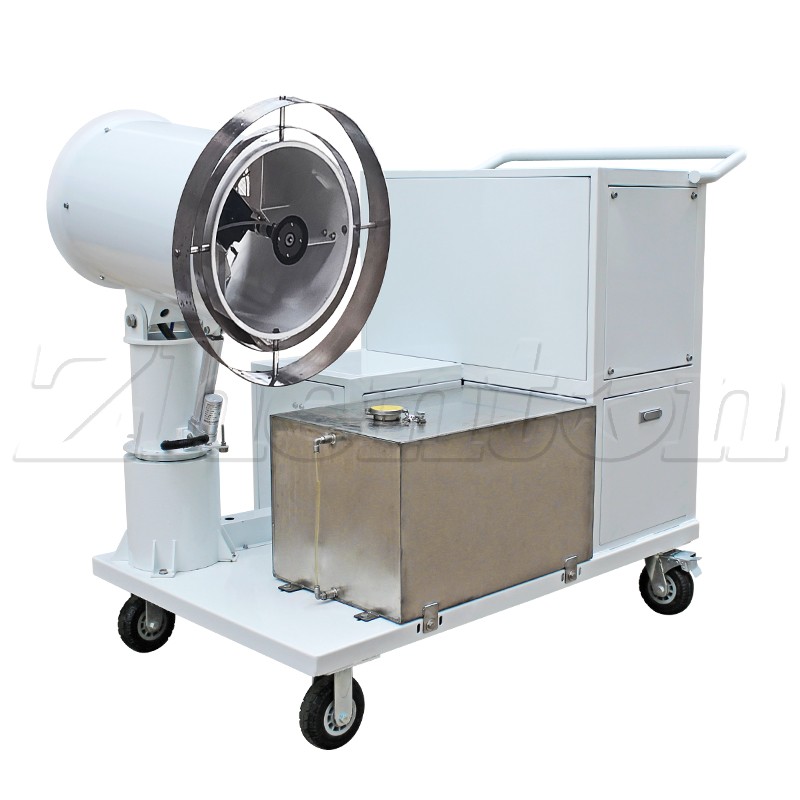
In industrial, mining, and construction environments, effective dust control is paramount for operational continuity, worker safety, and regulatory compliance. Traditional methods—simple water hoses or low-pressure sprinklers—are often inefficient and resource-intensive, failing to capture the fine, respirable particulates (PM2.5 and PM10).
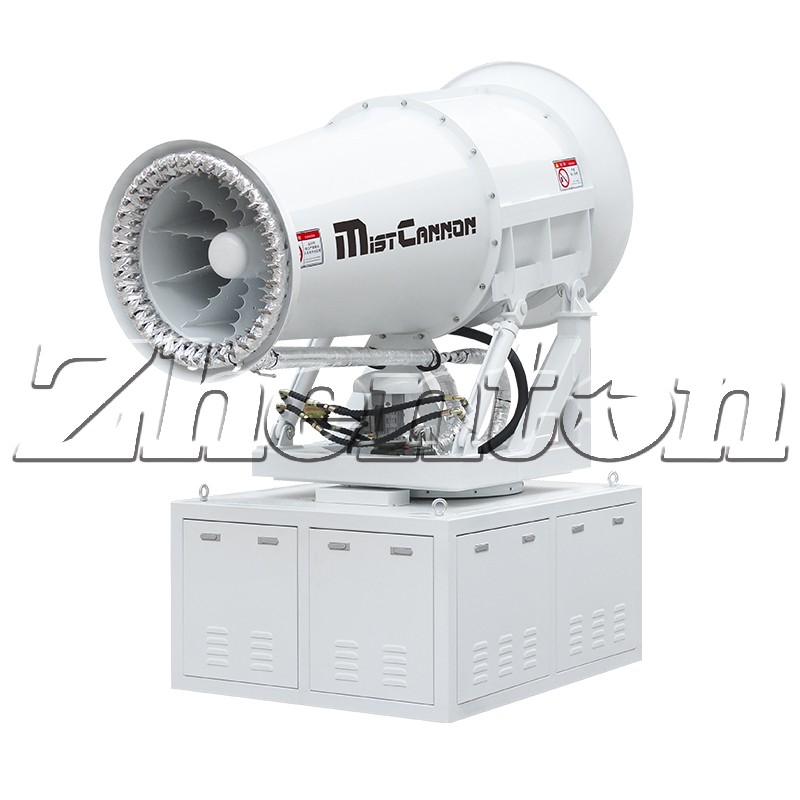
The Dust Suppression Cannon (Fog Cannon) represents a technological leap, moving beyond mere wetting to employing advanced atomization science and airflow dynamics. This article explains the core mechanics, highlights key features, and outlines the tangible benefits of integrating this technology into your operations.
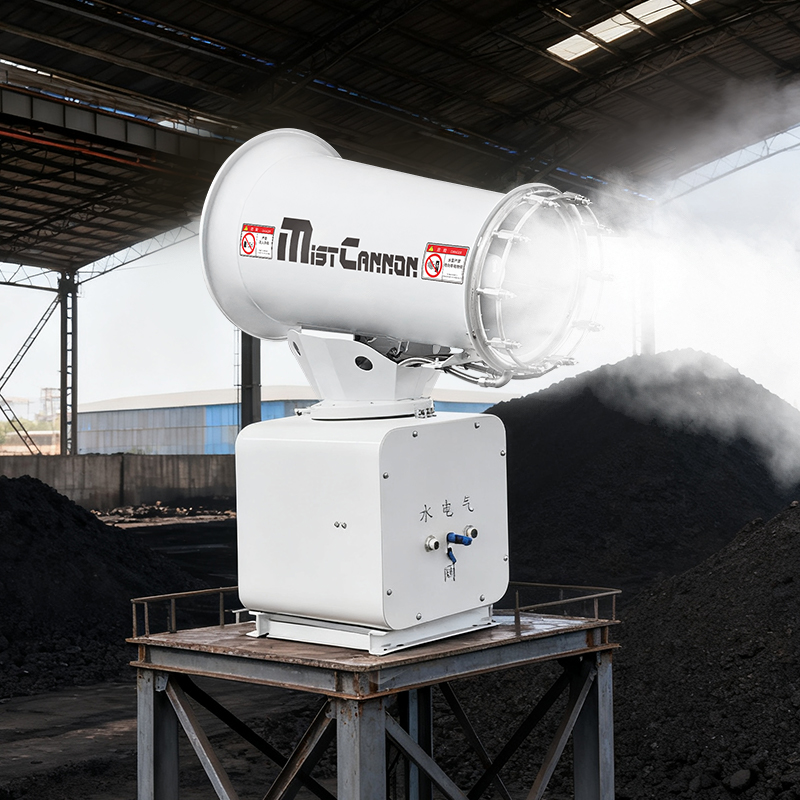
A Dust Suppression Cannon operates on a simple but precisely engineered principle: maximizing the probability of collision and agglomeration between water droplets and airborne dust particles.
2.1. Atomization (The Water System):
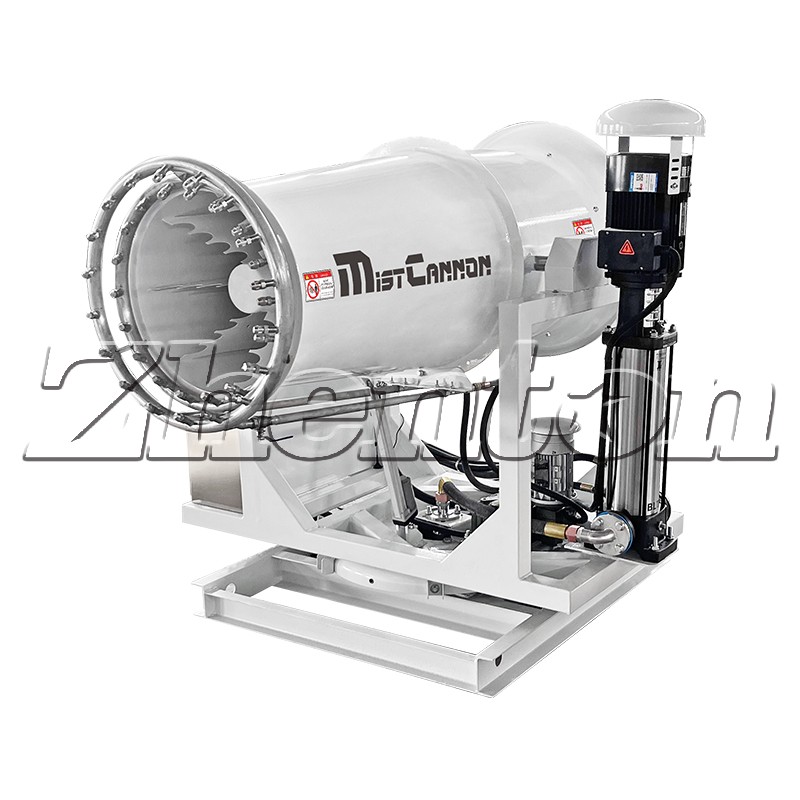
The core of the system is the high-pressure pump and the nozzle array. Water is pressurized to a high level (typically 5 to 50 bar) and forced through specialized nozzles. This process shears the water into a fine mist, producing droplets primarily sized between 10 and 150 (micrometers).
2.2. Particle Matching:
This droplet size is critical. Science dictates that maximum collision efficiency occurs when the water droplet is slightly larger than the dust particle. By controlling this size spectrum, the cannon ensures that the fine mist effectively targets and “captures” the dust particles, rather than simply blowing past them.
2.3. Projection (The Air System):
A powerful axial fan is positioned behind the nozzle array. This fan generates a high-velocity, uniform air stream. This airflow serves two functions:
It provides the kinetic energy needed to propel the mist over long distances (up to 150 meters), ensuring deep penetration into the dust plume.
It helps mix the fine mist with the dust cloud, maximizing the contact area and minimizing droplet fall-out near the cannon.
Once captured, the now heavier, water-laden dust particles lose aerodynamic suspension and settle quickly and safely to the ground.
Modern Dust Suppression Cannons integrate advanced features that transform performance and efficiency:
Variable Frequency Drive (VFD): Allows operators to adjust the fan speed and water flow rate proportionally. This is vital for adapting to wind conditions and specific dust levels, ensuring water conservation and precise coverage.
Oscillation and Tilt: Equipped with hydraulic or electric systems for 360° horizontal rotation and vertical tilt. This allows a single unit to cover vast, dynamic areas like stockpiles or large demolition zones.
Automated Control: Integration with PLC systems and external sensors (like anemometers) allows for autonomous operation. The cannon can activate, adjust throw distance, and optimize water flow based on real-time dust concentration or wind speed.
Durability and Materials: Units intended for harsh environments (mining, ports) utilize Marine-Grade Stainless Steel (316) and hot-dip galvanized frames to withstand corrosion, abrasion, and aggressive climate conditions.
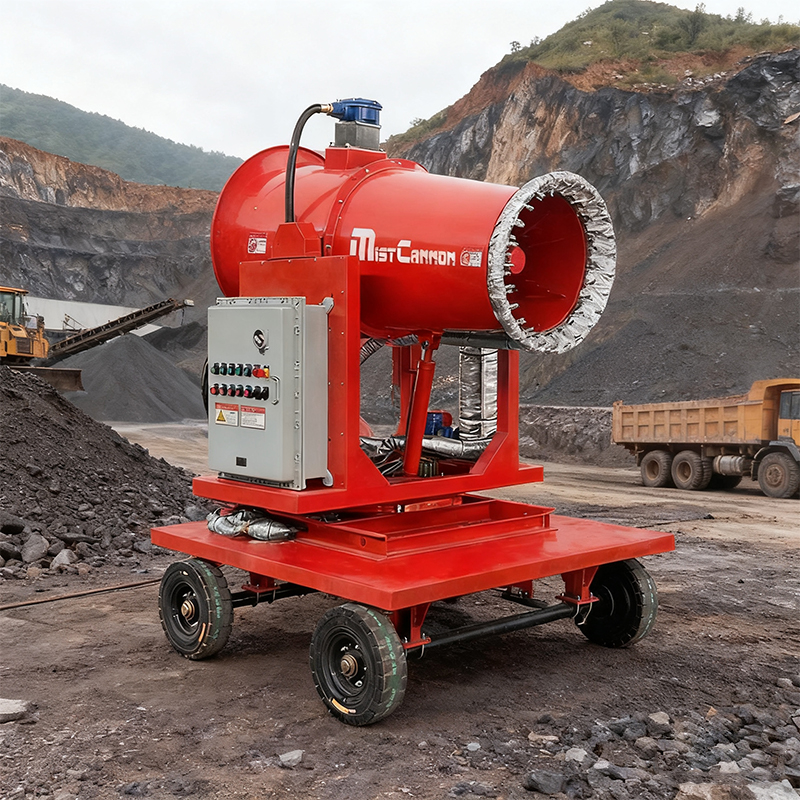
The deployment of a Dust Suppression Cannon delivers value across environmental, financial, and safety fronts:
| Benefit Category | Description of Value Added |
| Environmental Compliance | Assured PM Reduction: Achieves up to 90%+ capture of PM10/PM2.5 particles, ensuring full compliance with local air quality regulations and avoiding costly fines and operational shutdowns. |
| Safety and Health | Improved Visibility: Rapidly clears dust clouds at crushers and transfer points, reducing blind spots and minimizing collision risk. Protects Workers: Dramatically lowers the inhalation risk of Respirable Crystalline Silica (RCS), reducing long-term occupational health liabilities. |
| Operational Efficiency | Water Conservation: Uses finely atomized mist, consuming up to 70% less water than traditional hose systems, minimizing site runoff and conserving a valuable resource. Continuous Operation: Requires less labor than water trucks and runs continuously, ensuring proactive, consistent dust control. |
| Financial ROI | Reduced Maintenance: By keeping the air cleaner, dust abrasion on nearby heavy machinery (engines, bearings, filters) is reduced, extending equipment lifespan and lowering maintenance costs. |

The Dust Suppression Cannon is more than a piece of equipment; it is a scientifically engineered environmental management tool. Its ability to combine precise atomization physics with powerful airflow dynamics makes it the most effective method for controlling fugitive dust across large and complex industrial sites. Investing in this technology is a prerequisite for achieving operational safety, ensuring regulatory compliance, and securing a sustainable license to operate.
Contact With Us
If you have any questions please fell free to contact with us.