
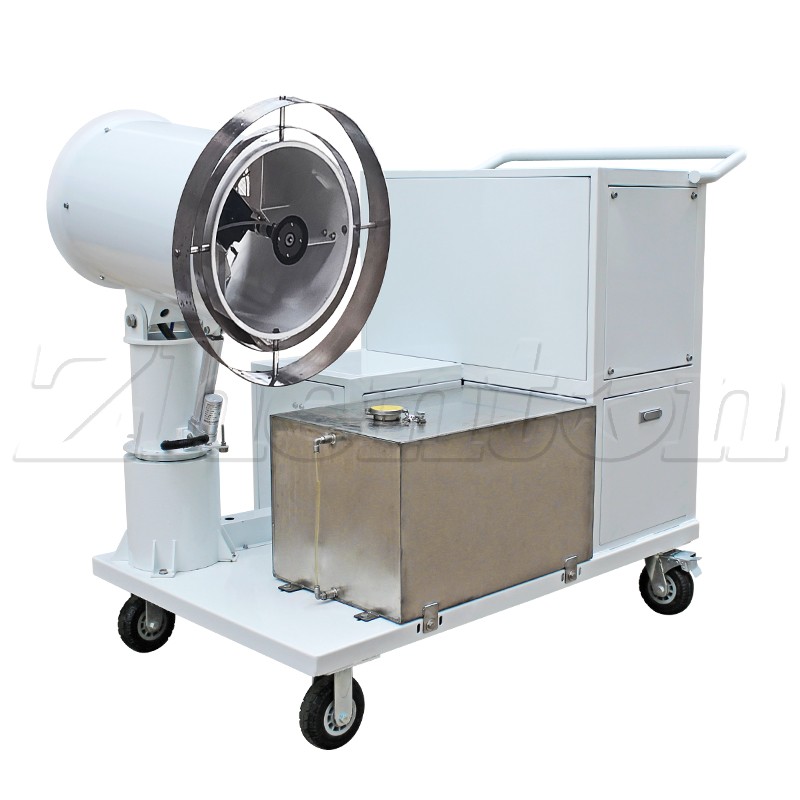
Coal stockyards are among the most challenging industrial environments when it comes to dust control. Large volumes of bulk material, constant loading and unloading, heavy truck traffic, and open-air exposure make coal dust a persistent and difficult problem. In many regions, including Central and South Asia, coal yard dust is no longer just an operational issue—it has become a serious concern related to worker safety, environmental compliance, and community relations.
This article explores the real causes of coal stockyard dust, why traditional methods often fail, and how mist fog cannon–based dust suppression systems offer a more effective and sustainable solution.
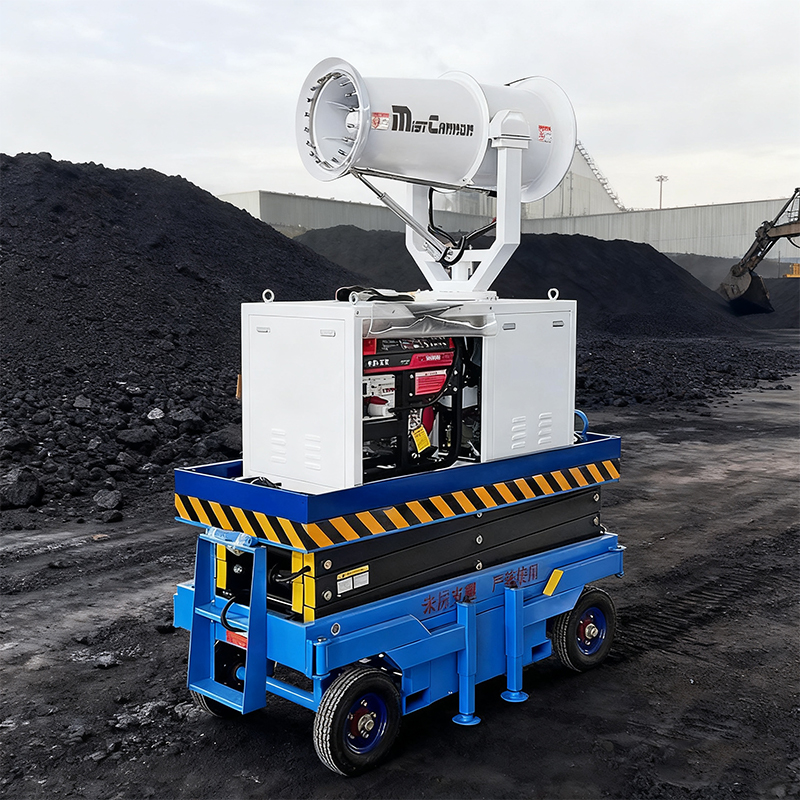
Coal dust is generated at almost every stage of coal handling. In a typical stockyard, dust sources include:
Unloading coal from trucks, trains, or conveyors
Stockpiling and reclaiming operations
Vehicle movement on unpaved or semi-paved internal roads
Wind erosion on exposed coal piles
Unlike enclosed industrial facilities, coal stockyards are usually open areas. Wind direction and speed change constantly, making dust control unpredictable. During dry seasons, fine coal particles can remain airborne for long periods, spreading far beyond the stockyard boundary.
For operators, this leads to multiple problems:
Reduced visibility affecting equipment operation
Increased wear on machinery and electrical components
Health risks for workers exposed to respirable dust
Complaints from nearby communities
Fines or shutdowns due to environmental non-compliance
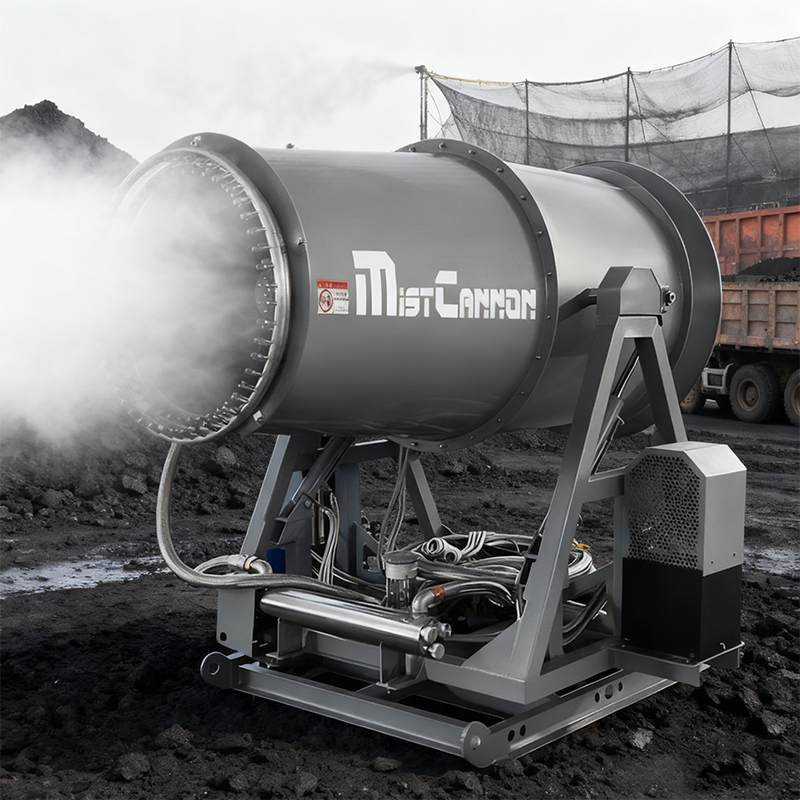
In the past, coal dust was often treated as an unavoidable byproduct of operations. Today, that mindset no longer works.
Environmental regulations are becoming stricter in many coal-producing and coal-consuming countries. Authorities increasingly require measurable dust reduction results rather than temporary or symbolic measures. At the same time, companies face growing pressure to improve workplace safety and reduce long-term health risks.
From an operational perspective, uncontrolled dust also leads to hidden costs:
Higher maintenance frequency
Shorter equipment lifespan
Increased cleaning and labor expenses
Effective dust control is not just about meeting regulations—it directly supports stable production and long-term cost control.
Many coal yards still rely on traditional dust suppression approaches, such as:
Manual water spraying
Fixed sprinkler pipelines
Water trucks operating on internal roads
While these methods can temporarily reduce visible dust, they often create new problems.
Manual spraying is labor-intensive and inconsistent. Fixed sprinklers usually cover limited areas and struggle to reach elevated or distant dust sources. Water trucks consume large volumes of water and fuel while offering only short-term results.
Most importantly, these methods rely on large water droplets that fall quickly to the ground. They are ineffective at capturing fine airborne dust particles, especially under windy conditions.
Modern dust control focuses on dust capture, not just surface wetting. This is where mist-based dust suppression systems come into play.
Instead of spraying large amounts of water, these systems atomize water into ultra-fine droplets. The droplets remain suspended in the air long enough to collide with dust particles, increasing their weight and forcing them to settle safely to the ground.
This approach offers several advantages:
More effective control of fine, respirable dust
Lower overall water consumption
Wider coverage with fewer units
Reduced impact on coal quality
Among mist-based solutions, mist fog cannon systems are widely used in large coal stockyards due to their long spray range and flexible coverage.
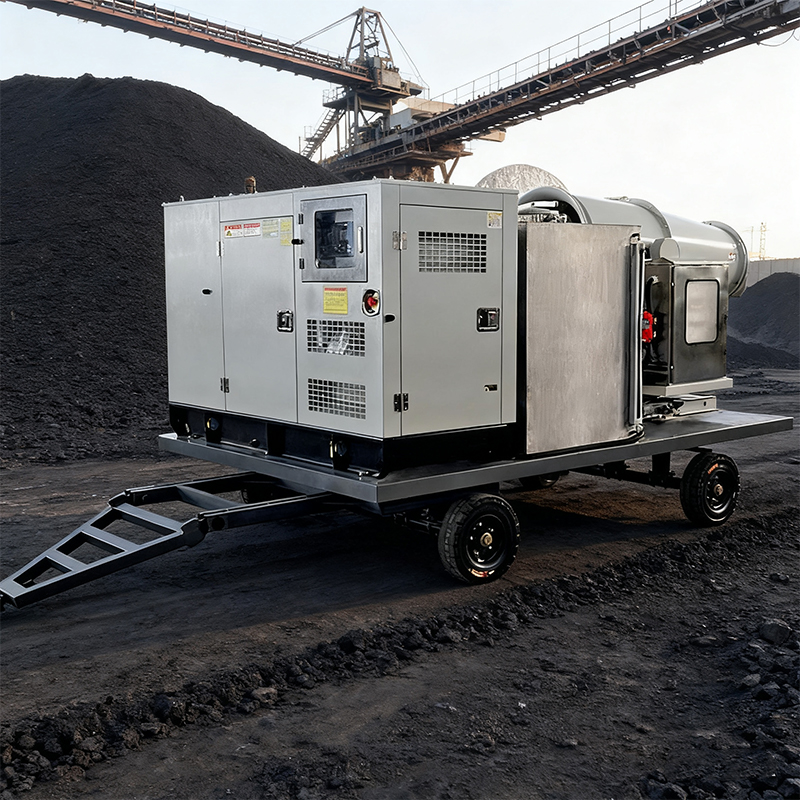
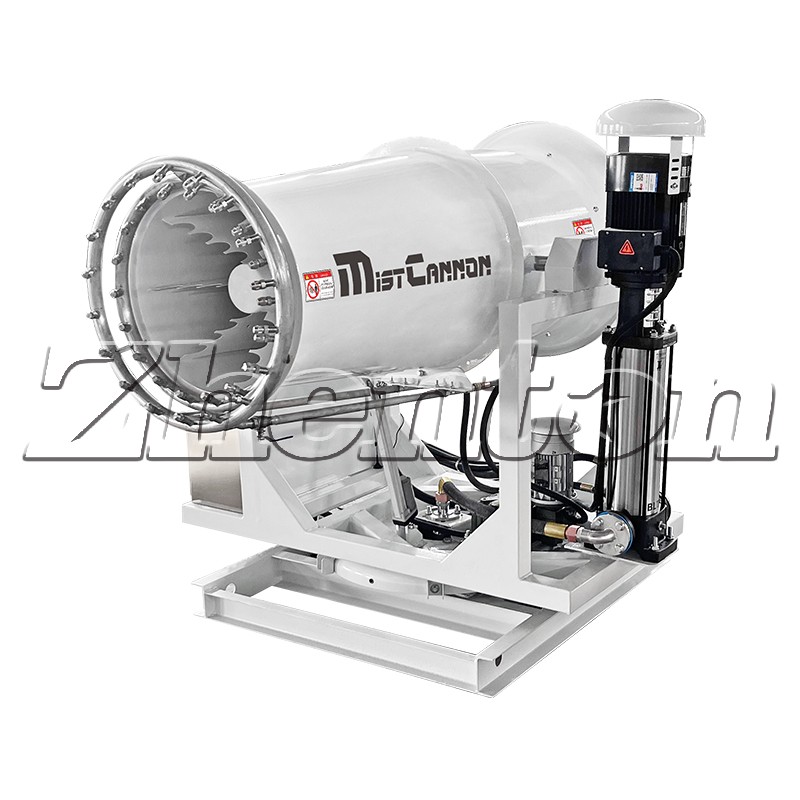
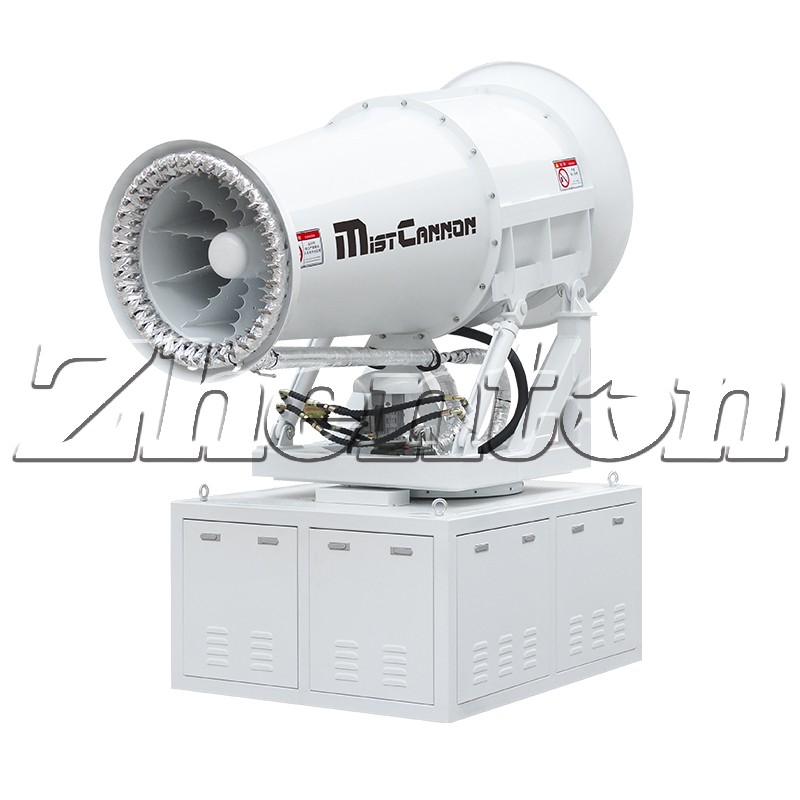
A mist fog cannon system combines a high-efficiency fan with a precision misting mechanism. The fan projects the mist forward, allowing it to reach distant dust sources that traditional sprinklers cannot cover.
In coal stockyard applications, mist fog cannons are typically installed:
Along the perimeter of coal piles
Near unloading and transfer points
At road intersections with high vehicle traffic
The system can be configured with automatic rotation, adjustable elevation angles, and programmable operation schedules. This allows the mist to adapt to changing dust conditions throughout the day.
Rather than soaking the coal, the system targets airborne dust, achieving effective suppression with minimal water use.
At an open coal stockyard project in Central Asia, the operator faced repeated dust complaints during peak unloading hours. Strong seasonal winds made manual spraying ineffective, and water consumption was increasing year by year.
After an on-site assessment, a mist fog cannon–based dust suppression system was installed. The solution included:
Fog cannons with a spray range of 60 meters
Fan motor power rated at 18.5 kW
A mist output of 4 tons per hour
Automatic rotation covering 0-320 degrees
The system was positioned to cover unloading zones and the windward side of coal piles. After commissioning, visible dust levels were significantly reduced, even during high-intensity operations. Water usage decreased compared with previous spraying methods, and the site met local environmental requirements without disrupting production.
Q1: Are mist fog cannons effective in windy environments?
Yes. When properly designed, mist fog cannon systems use optimized droplet sizes and adjustable spray angles, allowing effective dust capture under moderate wind conditions. For areas with strong prevailing winds, system layout and positioning are especially important.
Q2: Will mist spraying affect coal moisture content?
No. Unlike heavy water spraying, mist systems use fine droplets and focus on airborne dust rather than saturating the coal surface. This helps maintain coal quality while controlling dust.
Q3: How many fog cannons are needed for a coal stockyard?
The number of units depends on several factors, including stockyard size, pile height, dust intensity, and wind patterns. A customized layout based on site conditions always delivers better results than a fixed formula.
Not all dust suppression systems perform the same in coal yard environments. When selecting a solution, operators should consider:
Primary dust source locations
Required spray distance and coverage area
Local environmental standards
Automation and maintenance requirements
Water and power availability on site
A well-designed dust suppression system is not just equipment—it is a combination of technology, layout planning, and operational understanding.
Dust Control as a Long-Term Investment
Effective dust control should be viewed as a long-term investment rather than a temporary fix. By reducing dust emissions, coal stockyards can improve worker safety, protect equipment, and maintain good relationships with regulators and nearby communities.
Mist fog cannon systems offer a practical balance between performance, efficiency, and adaptability, making them a reliable option for modern coal stockyard dust management.
As environmental expectations continue to rise, choosing the right dust suppression system today helps ensure stable and compliant operations in the future.
Contact With Us
If you have any questions please fell free to contact with us.