
Hanoi is currently undergoing one of the most aggressive infrastructure expansions in its history. From the massive Ring Road 4 (Vành đai 4) project to the high-rise redevelopments in the Cầu Giấy and Nam Từ Liêm districts, construction is everywhere.
However, Hanoi’s unique urban layout—characterized by narrow access roads, high-density residential clusters, and strict noise ordinances—makes traditional dust control impossible. In this case study, we examine how Zhenton’s 60m Mist Cannons became the strategic choice for a major Tier-1 contractor operating in the heart of the capital.
The project involved a large-scale demolition and excavation phase near a major residential artery. Within the first week, the contractor faced two major hurdles:
Citizen Petitions: Residents complained about “Red Dust” settling on balconies and into local businesses.
Environmental Inspections: Local authorities threatened to halt the project if PM10 levels exceeded the city’s strict urban air quality thresholds.
Space Constraints: There was no room for a stationary water curtain or multiple small sprayers that would block heavy construction traffic.
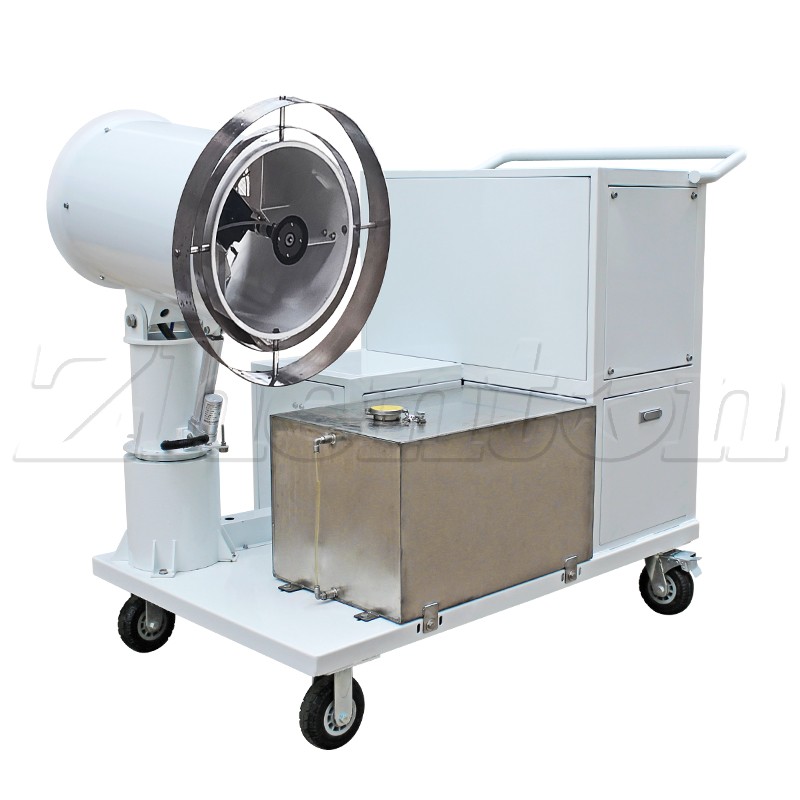
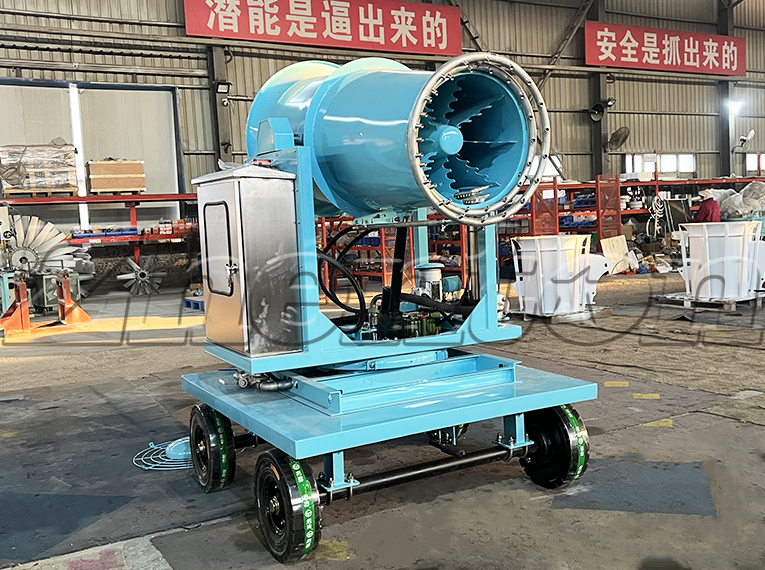
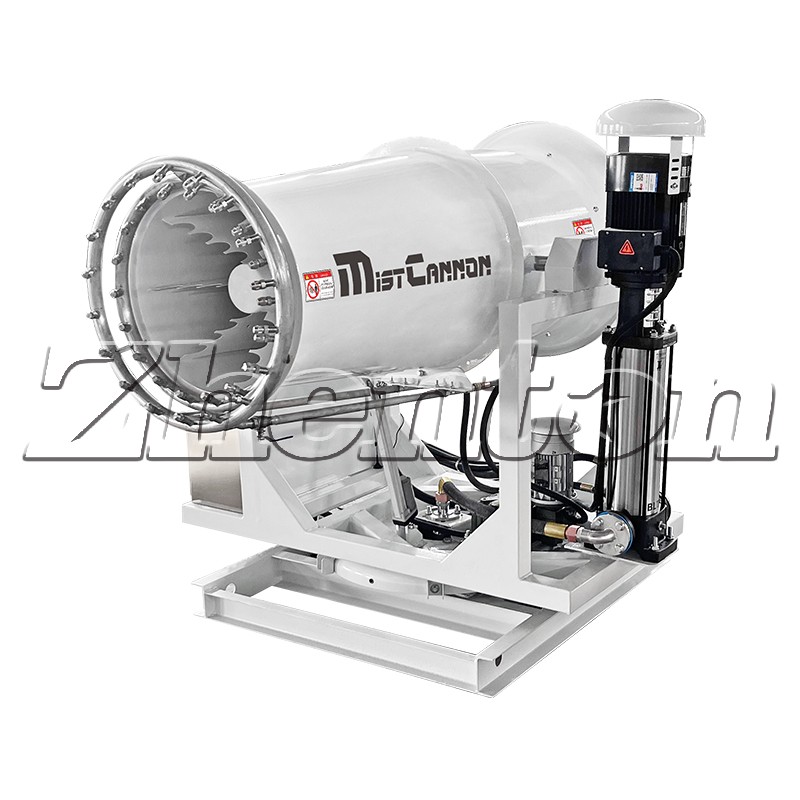
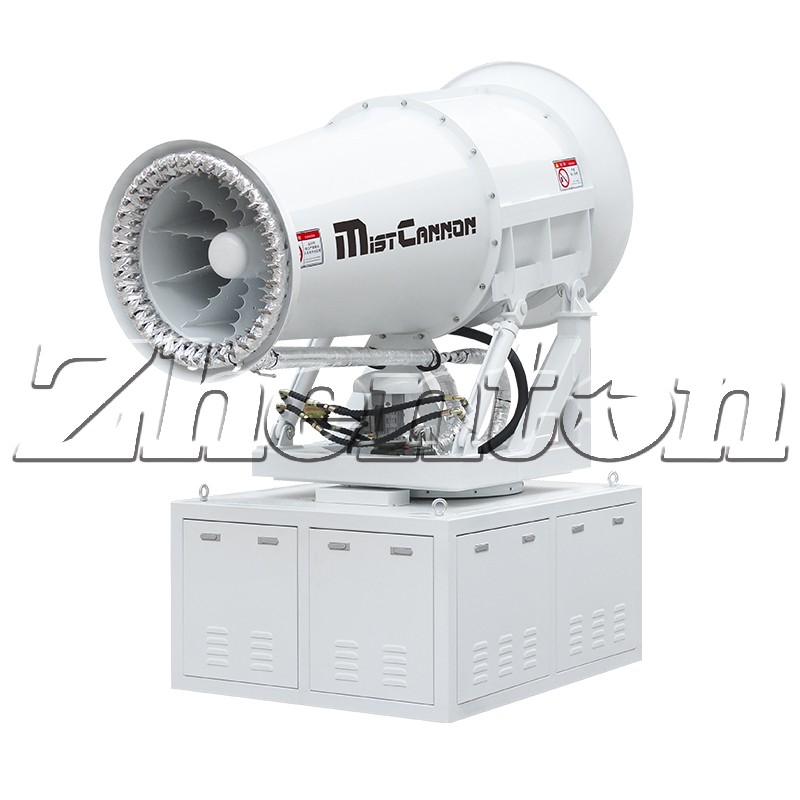
After a site audit, the contractor replaced eight manual hose operators with two Zheng Tong 60m Truck-mounted Mist Cannons.
Why 60 meters?
Centralized Positioning: Instead of placing multiple units around the site, one 60m unit was positioned in a “dead zone” (an area not used by trucks). Its massive throw distance allowed it to cover the entire excavation pit from a single, non-intrusive point.
Variable Atomization: In Hanoi’s humid morning air, the cannon was set to a “fine mist” to prevent puddling on public roads. During the dry, windy afternoons, the turbine speed was increased to create a “heavy mist” barrier that acted as a physical wall against wind-blown dust.
One of the biggest concerns for Hanoi projects is the Noise Limit (TCVN 5949:1998). Many high-powered fans are too loud for nighttime operation in residential areas.
The Zheng Tong Advantage: Our 60m units are engineered with high-efficiency bionic fan blades that reduce air turbulence. During this project, the units operated at decibel levels significantly lower than standard industrial turbines. This allowed the contractor to continue excavation work during the 9:00 PM – 11:00 PM window without triggering noise complaints from nearby apartment complexes.
After 30 days of operation with the 60m Mist Cannons, the contractor reported the following:
92% Reduction in Visible Dust: Airborne dust plumes were suppressed within seconds of the excavation grabs hitting the soil.
Zero Environmental Fines: Continuous air quality monitoring showed PM10 levels remained well within the “Green Zone” for the remainder of the project.
85% Water Savings: The project consumed significantly less water than the previous “fire-hose” method, reducing the cost of water hauling and preventing mud-runoffs into Hanoi’s sewage system.
A: This case study validates the technical data found on our Building Demolition Page. Urban demolition in Hanoi requires a specific “mist density” that only a turbine-powered cannon can provide.
A: No. Because these were Truck-mounted units with integrated diesel generators, they were completely independent of the local grid. Even during peak-hour power restrictions in the industrial zones, the dust suppression never stopped.
A: Surprisingly, yes. Hanoi’s air has high acidity due to industrial smog and humidity. The anti-corrosion coating ensured that the turbine blades didn’t show signs of pitting or rust after exposure to the city’s aggressive urban atmosphere.
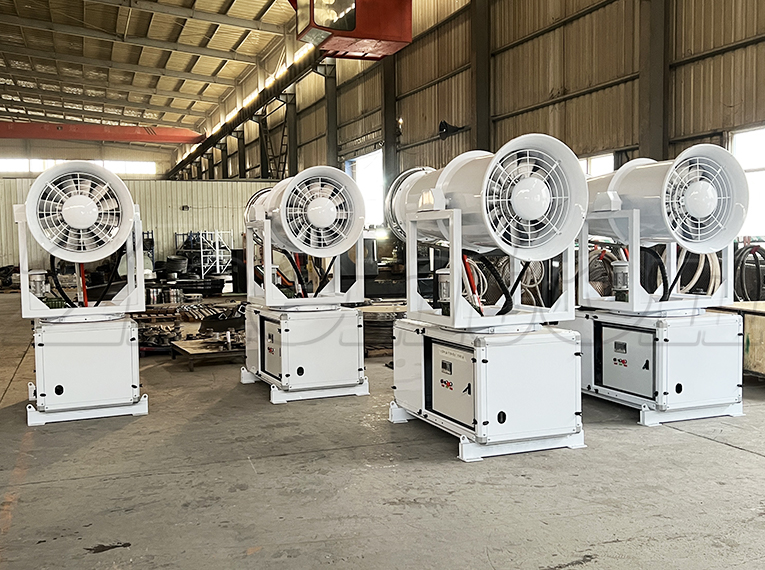
The success of this project has made the Zhenton 60m Mist Cannon a required spec for many upcoming tenders in North Vietnam. In a city as dense as Hanoi, you cannot afford “weak” dust control. You need the reach, the silence, and the reliability of a professional-grade system.
Is your Hanoi project ready for inspection?
Contact With Us
If you have any questions please fell free to contact with us.