
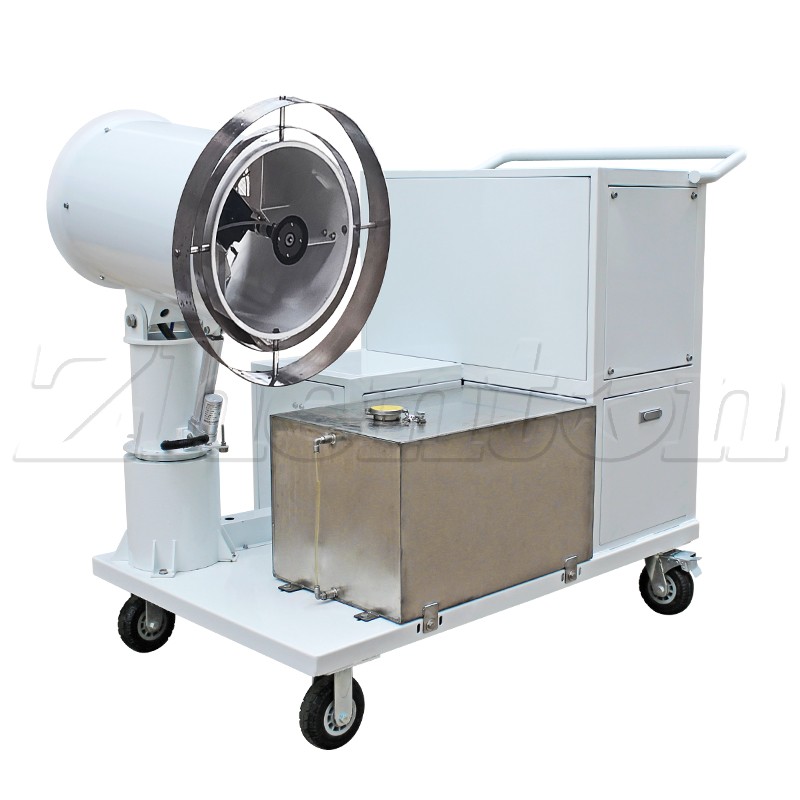
If you have operated heavy machinery in the industrial corridors of Hai Phong or the construction sites of the Mekong Delta, you know that the environment is a silent killer of equipment. Most dust suppression cannons are designed for temperate climates—Europe, North America, or Northern China. When these “standard” units arrive in the 90% humidity and 38°C heat of a Vietnamese summer, their lifespan is often cut in half.

Vietnam’s 3,200km coastline means that salt-laden air is a constant factor, not just at the docks, but up to 50km inland. Combined with high humidity, this creates a high-speed corrosion environment that can eat through standard steel in a single season.
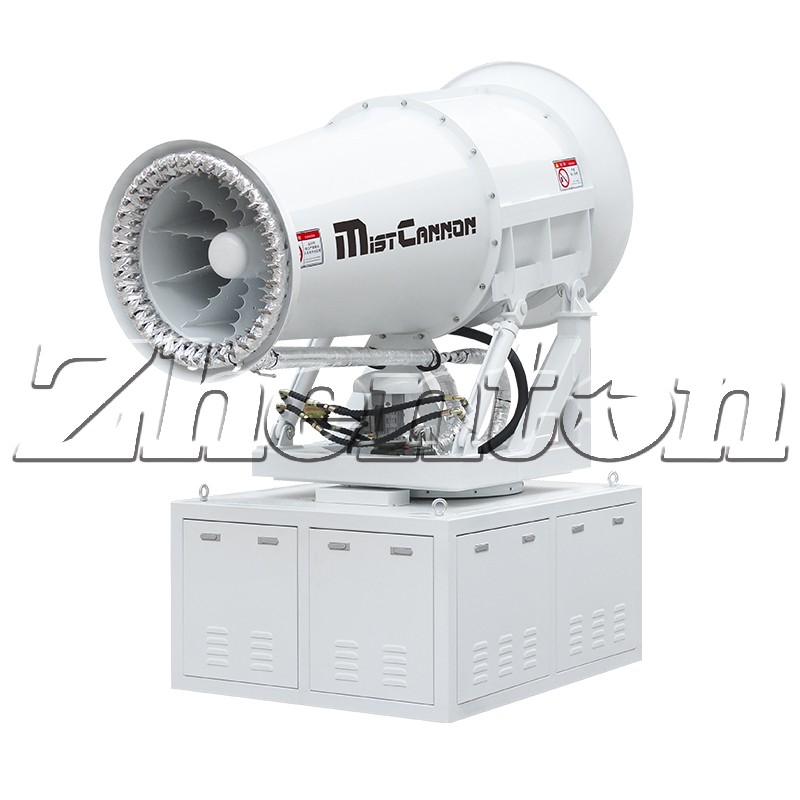
C5-M Marine Grade Coating: Unlike standard industrial paint, our 60m cannons undergo a multi-stage coating process. We utilize a zinc-rich epoxy primer followed by a high-build polyurethane topcoat, meeting the C5-M (Marine) standard. This provides a chemical barrier that stops salt molecules from reaching the metal surface.
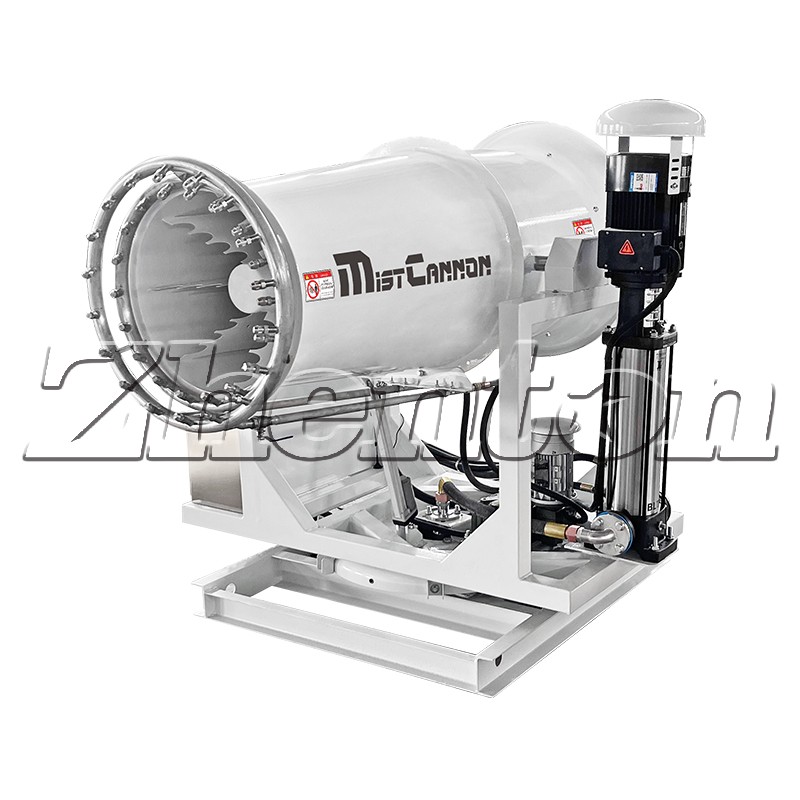
Stainless Steel Nozzle Manifolds: While others use galvanized steel, we use Grade 304 or 316 stainless steel for the atomization ring. This prevents the “clog-and-corrode” cycle caused by mineral-heavy local water and salty air.
A mist cannon’s motor generates significant heat. In a cool climate, this dissipates easily. In the stagnant, hot air of a Hanoi construction site in July, a standard motor can reach its breaking point in less than two hours.
Class H Insulation: Our motors are wound with Class H insulation materials, rated for temperatures up to 180°C. This provides a massive safety buffer during extreme heatwaves, preventing the motor windings from melting or short-circuiting.
Enhanced Airflow Dynamics: We have redesigned the turbine housing to not only throw mist further but to pull more cooling air across the motor casing. This ensures a 100% duty cycle, meaning the machine can run 24/7 during the urgent final phases of a project without overheating.

A truck-mounted cannon faces a different set of challenges than a stationary one. It must survive the constant vibration of transit over unpaved site roads and the rhythmic stress of a diesel engine.
Reinforced Chassis Mounting: Standard bolts will sheer under the stress of a 60m cannon’s torque and truck vibration. We use high-tensile, vibration-dampening mounts that isolate the turbine from the truck’s frame, absorbing shocks before they reach critical joints.
Shock-Proof Control Panels: All electronics are housed in IP65-rated enclosures with silicone-damped internal components. This prevents the “phantom electrical faults” that often plague mobile units after a few months of use on rugged terrain.
We believe that a durable machine must also be a maintainable machine. In the remote provinces of Vietnam, you don’t always have access to specialized software.
Mechanical Manual Overrides: While our systems are fully automated, we include manual bypasses for all critical functions. If a digital sensor fails, your project doesn’t stop—you can switch to manual mode and keep working.
Universal Component Sourcing: We use high-quality, globally recognized brands like NSK bearings and Schneider electrical components. If you need a replacement part in five years, you can find it in any major Vietnamese industrial supply store.
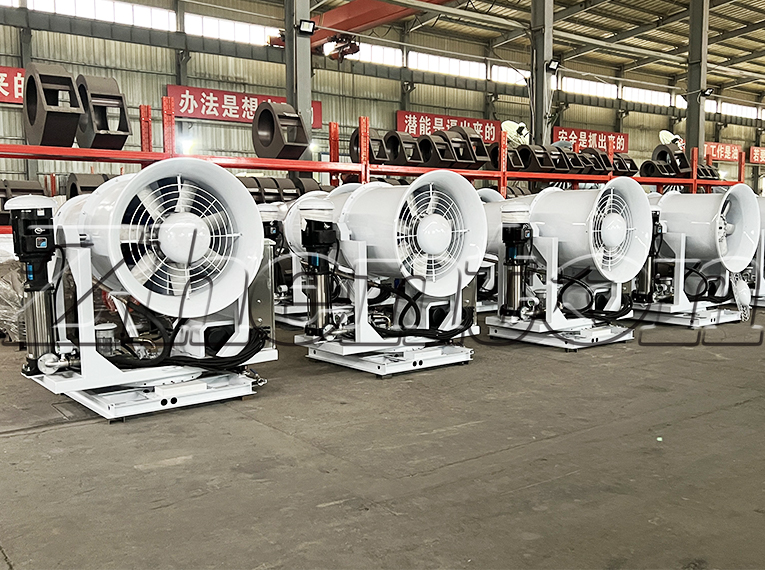
A: High humidity makes the air more dense, which can “drag” on the mist. Our 60m cannons use a high-torque fan motor to ensure the air velocity is sufficient to push through the heavy tropical air. It’s about maintaining high static pressure, not just fan speed.
A: With basic monthly maintenance (rinsing the filters and checking the coating), our units are engineered for a 10-15 year service life. We have units in similar coastal environments globally that are still operating at full efficiency after a decade.
A: Yes. Whether it’s the red basalt dust of the Central Highlands or clinker dust in a cement plant, the durability comes from our triple-stage filtration system. We protect the internal pump and nozzles from abrasive wear, which is the most common cause of equipment failure.
Contact With Us
If you have any questions please fell free to contact with us.